Verona Villafranca airport (VRN, formally Aeroporto Valerio Catullo) sits in flat farmland about ten kilometres south-west of Verona itself. Sirmione, on the southern tip of Lake Garda, is another twenty-five kilometres further west. The two are joined by the A4 autostrada — the main east-west motorway across the Po Valley — and on a quiet weekday morning the drive between them takes thirty minutes flat. On a Friday afternoon in August it can take an hour. None of the official airport literature spells this out, so this is a guide written from the other side: by someone who picks people up from VRN about ten times a year and drops them off at the same place again on the way home.
The geography, in one line
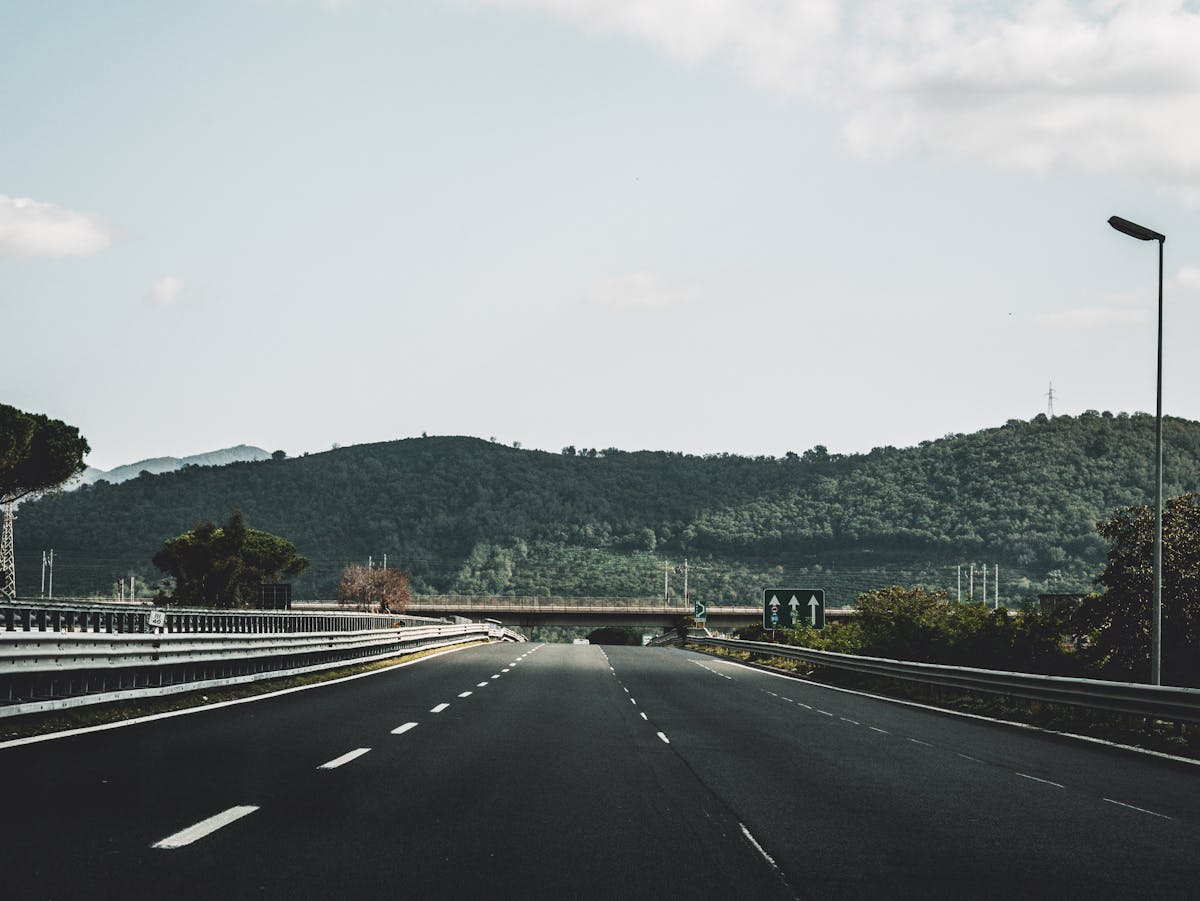
VRN to Sirmione is thirty-five kilometres along the A4. The route is signposted for Brescia and Milano. You leave the autostrada at the Sirmione exit, drive the SP11 for about four kilometres north, and you're at the gates of the old town. There are no mountain passes, no border posts, no awkward transfers between transport networks. The drive is one of the most boring in northern Italy, which is to say it's also one of the easiest.
What changes between options isn't the route. It's the price, the convenience, and how long you wait at either end.
By pre-booked transfer or taxi
If you don't want to think about anything once you've landed, this is the simplest answer. You arrange a car in advance, the driver waits at arrivals with a sign, and forty minutes later you're at your hotel.
Two slightly different versions of this exist. Local taxis at VRN are licensed, metered, and reliable, but the meter rate to Sirmione usually lands somewhere between ninety and a hundred and ten euros depending on the time of day and the season. There's no fixed published fare for this route on the municipal tariff — the meter just runs.
Pre-booked private transfers are the other version. You pay a fixed price agreed in advance, generally seventy to ninety-five euros for a standard car for up to three passengers, more for a minivan or for a late-night run. The driver tracks your flight and waits even if you're delayed, which is the part that genuinely matters when you've come off a six-hour flight and missed a connection.
A practical note
If you're travelling as a couple or solo, and your hotel is in Sirmione's old town, the pre-booked transfer almost always wins on a per-person basis once you factor in that the bus drop-off is not at the gate. With three or more people, it's the cheapest fixed option besides the train.
I tend to book a private transfer when friends are arriving on a late flight from London or Berlin, and a regular taxi when I'm flying back myself in the early afternoon. The taxi rank at VRN is right in front of the arrivals hall and the wait is usually short. There's no real downside to either, unless you specifically need a child seat — for that, only the pre-booked services reliably deliver, because the local taxis are not legally required to carry one and most don't.
By train and bus
This is the option for people who don't mind a small amount of logistics in exchange for spending under fifteen euros total. From the airport you take the ATV airport bus 199 to Verona Porta Nuova, the city's main railway station. It runs every twenty minutes during the day, takes about twenty minutes, and costs around six euros. You buy your ticket from the machine at the bus stop or from the driver.
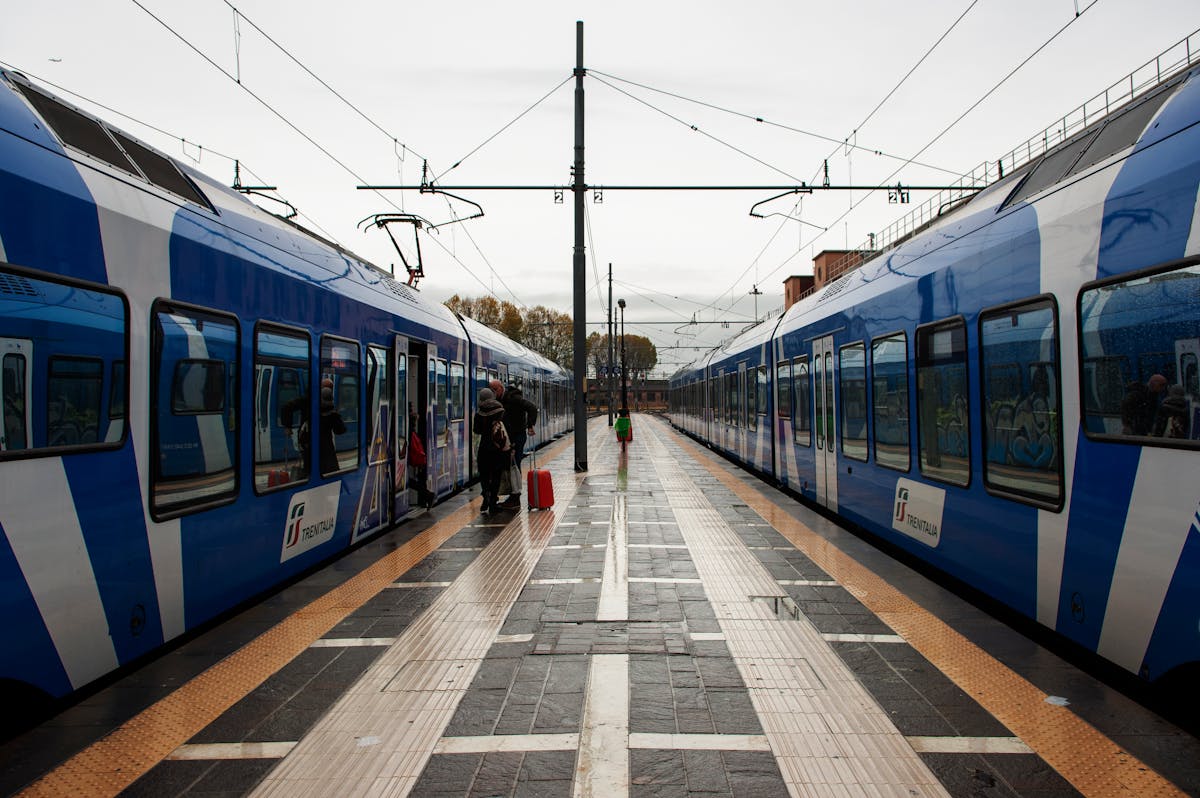
From Porta Nuova, you board a regional train on the Milano–Venezia line and get off at Desenzano del Garda. The train ride is fifteen to twenty minutes. Trenitalia regional fares for this segment are typically around six to seven euros, and the trains run on a roughly half-hourly cadence through the day.
From Desenzano station, the local bus to Sirmione (line LN026 in the current schedule, run by Arriva Italia) leaves every forty minutes in winter and every twenty in summer. The journey is twenty-five minutes and costs about three euros. You can also walk down to the lake from the station and take the seasonal ferry — see the south Garda transit guide for that option, which only works from late spring to early autumn.
Total time from VRN to Sirmione's gate: between an hour and forty minutes and two and a half hours, depending on connections. Total cost for one adult: about fifteen euros. Total stress: more than a transfer, less than navigating Verona at rush hour with luggage.
The seasonal direct shuttle
From May to early October a few private operators run direct shuttle minibuses from VRN to Sirmione. They leave a few times a day — usually three or four — and cost around twenty to twenty-five euros per person. You book online in advance.
The advantage is that you don't change anywhere; it's a one-vehicle trip. The disadvantage is that the schedules are sparse and they often don't match late-evening or very early flights. I rarely use them for that reason. But if your arrival happens to line up with a departure they're a quiet, civilised middle ground between the train option and a private car.
By rental car
If you're staying multiple days and planning to explore around the lake — Bardolino, Lazise, the Valpolicella wine country to the east, or even Verona itself — a rental car earns its keep quickly. Standard daily rates from the major chains at VRN start around thirty-five euros in shoulder season and climb past seventy in summer.
The catch with Sirmione specifically is that you can't actually drive into the old town. Cars are blocked by the drawbridge gate, and the parking inside the walls is reserved for residents with permits. You'll need to park at one of the public lots just south of the historic centre — Piazzale Europa or the larger Piazzale Montebaldo — and walk in. Parking runs around two euros an hour, with daily caps in the fifteen to twenty euro range.
If your hotel is inside the walls, the hotel itself can usually arrange a permit for one drop-off, but you can't keep the car there. So a rental works well if you're touring the lake; less well if you're staying in Sirmione's old town the whole time and not going anywhere.
A real-world price comparison
Numbers below are typical 2025 figures for a one-way trip, two adults travelling together, normal weekday timing. Prices for taxis and transfers vary with season and time of day; train and bus tickets are stable.
| Option | Time | Total cost | Best for |
|---|---|---|---|
| Train + bus | ~2 hrs | €28–32 | Solo or budget travellers without much luggage |
| Direct shuttle (seasonal) | ~50 min | €40–50 | Couples in summer with a matching schedule |
| Local taxi | ~35 min | €90–110 | Spontaneous arrivals, no advance planning |
| Pre-booked transfer | ~35 min | €70–95 | Late-night arrivals, families with children, fixed price |
| Rental car | ~35 min + parking | €35+/day | Trips longer than two nights covering more of the lake |
What I actually do
It depends on the day. When I'm flying in alone for a long weekend at the family house in Padenghe, I take the train to Desenzano and ask my husband to pick me up at the station. When friends are arriving for the first time and don't speak Italian, I tell them to book a private transfer in advance — the price difference from a taxi is small, and it removes the only difficult moment of the journey. When my parents come over in August they fly into Verona because there are direct flights from London Gatwick, and we meet them at arrivals because the family car needs to be there anyway.
Arriving in Sirmione: where you'll be dropped
If you've taken the bus from Desenzano, you'll arrive at Piazzale Montebaldo, just outside the gate to the old town. From there it's a five-minute walk through the medieval drawbridge and into the centre. The buses don't go inside the walls.
If you've taken a taxi or transfer, the driver can usually take you as far as Piazzale Porto where the boats dock — that's the closest legal drop-off to most hotels in the historic centre. Some hotels can arrange a one-time permit for the driver to come right to the door; it's worth asking when you book, especially with luggage.
From Piazzale Porto it's a flat ten-minute walk along the lakeside to the Catullo end of the peninsula. If your hotel is up by the Catullus Grottoes, the hotel may have a small electric shuttle. Most don't, but the walk itself is genuinely pleasant — provided you've packed sensibly.
Once you're in, the hard part of the trip is over. The thermal waters open at nine, the boats leave the harbour at quarter past, and the rest of the lake is a half-hour bus ride away in any direction. For more on getting around once you're here, see the south Garda transit guide; for which months are actually worth visiting, the month-by-month read covers it.